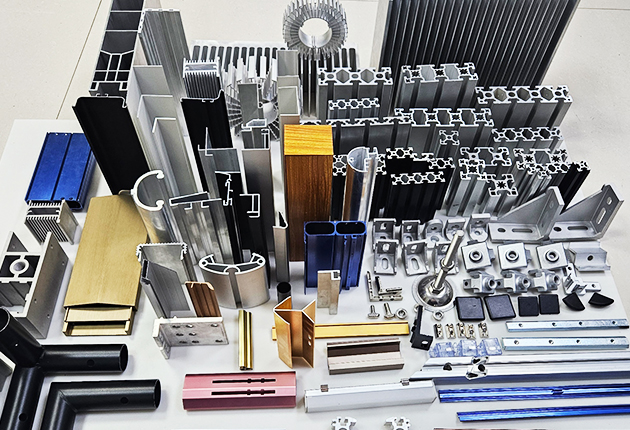
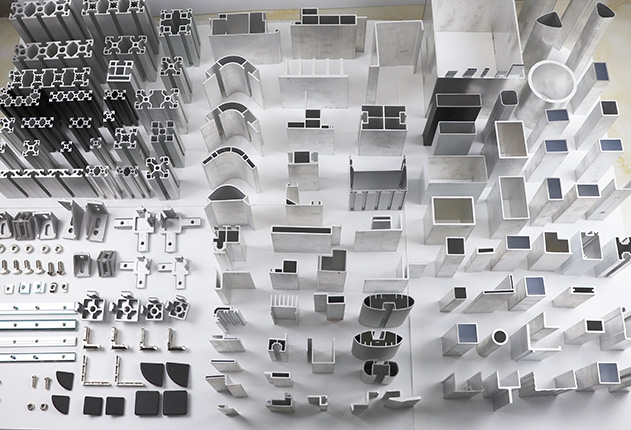
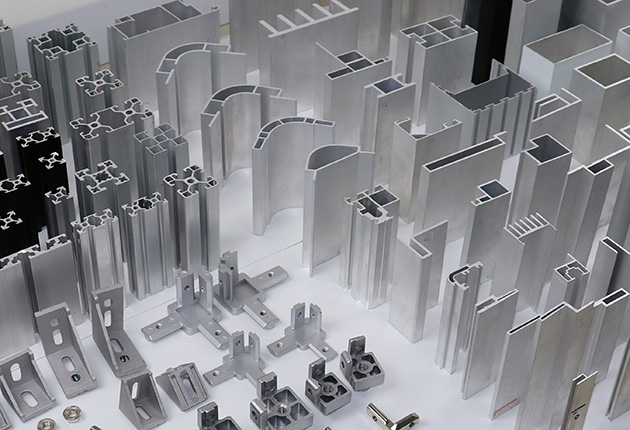
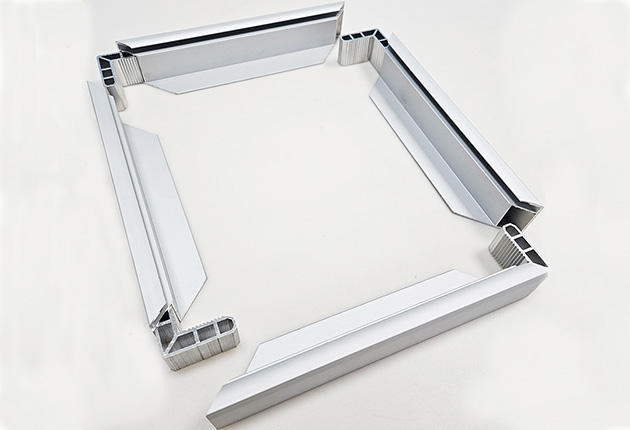
4040 aluminium extrusion is a 40 mm × 40 mm T-slot aluminium profile with an 8 mm slot on all four sides — the world's most widely used modular framing profile for machine frames, workbenches and automation structures.


4040 Aluminium Extrusion One Size, Chosen More Than Any Other

Dozens of T-slot profile sizes exist, yet one outsells them all: 4040. Machine builders, automation engineers, workshop owners and DIY builders keep coming back to the 40 mm × 40 mm section — not by habit, but because its combination of advantages is hard to beat.

Here is what makes 4040 the default choice, advantage by advantage.

1. The Strength-to-Weight Sweet Spot

Smaller profiles (2020, 3030) flex under real machine loads. Larger ones (8020 and up) are strong but heavy and expensive.

4040 sits exactly in between: rigid enough for machine frames, workbenches, conveyor structures and equipment stands, yet light enough that one person can carry, position and assemble a complete frame alone.

You pay for the strength you actually use — no more, no less.

2. Slots on All Four Sides

Every face of a 4040 profile carries an 8 mm T-slot. Brackets mount on top, panels slide in from the side, sensors clamp underneath, doors hang on the front — all on the same member, all at any point along its length.

A square steel tube gives you four flat faces and a drill; 4040 gives you four continuous mounting rails.

3. No Welding — Fast, Clean Assembly

4040 frames are built with corner brackets, T-nuts and M8 bolts. That means:
No welders, no hot work, no distortion from welding heat
No grinding, priming or painting after fabrication
Assembly in hours instead of days, with basic hand tools
Frames can be built in clean environments — labs, food plants, showrooms — where welding is not allowed

4. Adjustable, Reusable, Never Wasted

A welded frame is frozen the day it is finished. A 4040 frame is never finished — and that is its biggest advantage.

Loosen the bolts and a cross-member slides to a new position; a production line changes layout over a weekend; a machine is upgraded instead of replaced.

When a structure is finally retired, the profiles unbolt and go straight into the next project. The material is an asset, not scrap.

5. The World's Largest Accessory Ecosystem

Because Series 40 is the most widely used T-slot system on the planet, everything exists for it: T-nuts and sliding nuts, corner brackets in every angle, hinges, handles, levelling feet, castors, end caps, panel clamps, cable ducts and door hardware — from countless suppliers, in every market.

Standard M8 fasteners fit the 8 mm slot. You will never be stuck waiting for a special part to finish a frame.

6. It Scales Within the Same System

4040 is not a dead end — it is the centre of a family:

Light and heavy-duty 4040 variants share the same outside dimensions, so you can strengthen one member without changing the design
4080 and 40120 use the same slot and accessories, so long spans and heavy beams upgrade inside the same frame
2020 and 3030 connect for light sub-assemblies, guards and covers
Start with a basic 4040 frame today, and it can grow into a full production cell tomorrow without a redesign.

7. Corrosion-Proof and Finished as Delivered

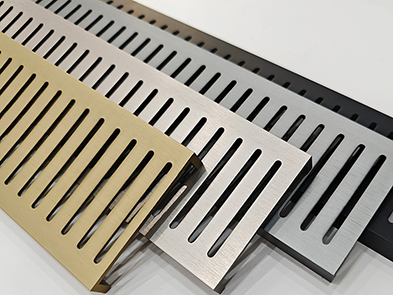
Aluminium does not rust. With an anodized finish, 4040 profiles resist corrosion, wipe clean and keep their appearance for years — indoors, outdoors and in humid or washdown environments.
There is no paint to chip, no coating schedule to maintain, and the clean silver or black look suits customer-facing installations as well as factory floors.

8. Precision That Makes Assembly Easy

Extruded profiles are straight and dimensionally consistent along their full length, and the slots are uniform from end to end.
Frames go together square, doors close properly, linear guides and panels align the first time.
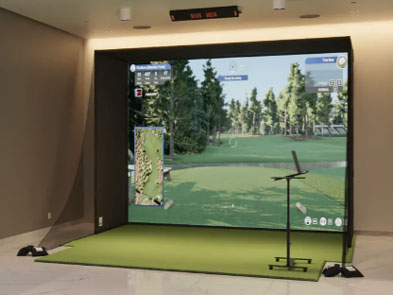
That precision is also why 4040 is trusted for simulator cockpits, test rigs and measuring fixtures, where flex and misalignment are immediately visible.

9. Lower Total Cost Than It First Looks
Per kilogram, aluminium costs more than mild steel — and per finished frame, 4040 usually costs less.
The saving is in everything around the material: no welding labour, no surface treatment, no rework, faster assembly, cheaper freight (a fraction of the weight), free reconfiguration instead of new fabrication, and full reuse value at the end.
 Buyers who compare total project cost, not metal price, choose 4040.