Choosing between aluminum tubing and steel tubing is one of the most common decisions in fabrication, construction and product design.
Both materials are strong and widely available — but they behave very differently in weight, corrosion, processing and lifetime cost.
Property
|
Aluminum Tubing
|
Steel Tubing
|
Weight
|
About 1/3 the weight of steel
|
Heavy
|
Corrosion
|
Naturally corrosion-resistant, does not rust
|
Rusts unless galvanized, painted or stainless
|
Forming
|
Easily extruded into custom & complex shapes
|
Mostly standard round/square/rectangular sections
|
Thermal conductivity
|
High — good for heat dissipation
|
Low
|
1. Weight: Aluminum Wins by a Wide Margin

Aluminum weighs roughly one-third as much as steel. For the same tube dimensions, switching from steel to aluminum can cut the weight of a structure by 50% or more once wall thickness is adjusted for stiffness.


2. Strength: Steel Is Stronger per Section, Aluminum per Kilo
Steel has higher absolute strength and hardness, and it resists denting better. If your design is limited by space and needs maximum load in a small section, steel is hard to beat.

But measured by strength-to-weight ratio, aluminum alloys such as 6061-T6 and 6063-T5 perform extremely well. Engineers routinely match steel's performance with a slightly thicker aluminum wall — while still saving a large share of the weight.

3. Corrosion Resistance: Aluminum Needs No Rust Protection
Steel rusts. Outdoors, it must be galvanized, painted or powder coated, and that coating needs repair over time. If the coating is scratched, corrosion starts at the scratch.

Aluminum forms a natural oxide layer that protects it from further corrosion. It does not rust, even when the surface is scratched. With anodizing or powder coating, aluminum tubing serves for decades in outdoor, coastal and humid environments with almost no maintenance. This is why aluminum is the default choice for solar frames, outdoor structures and marine use.

4. Fabrication: Aluminum Offers Custom Shapes Steel Can't Match
Steel tubing is typically bought in standard shapes and then cut, drilled and welded.

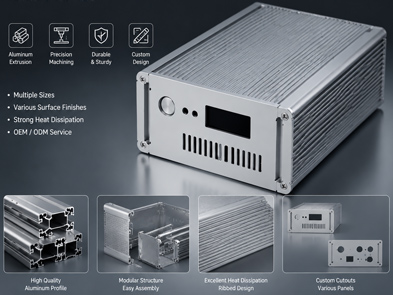
Aluminum tubing is produced by extrusion, which means the cross-section itself can be custom-designed: round, square and rectangular tubes — but also finned tubes, wing-blade profiles, T-slot profiles and complex hollow sections with screw ports and ribs built in. Features that would need several welded steel parts can often be extruded as one single aluminum profile, reducing assembly work.

Both materials can be cut and drilled easily. Steel is simpler to weld; aluminum welding requires TIG or MIG equipment and more operator skill, though mechanical joining (bolts, brackets, corner connectors) is common for aluminum and avoids welding altogether.

5. Cost: Compare the Total, Not Just the Price per Kilo

Steel tubing is cheaper per kilogram. But the purchase price is only part of the story:

Freight: aluminum ships at about 1/3 the weight
Installation: lighter tubes need less labor and lighter supporting structures
Maintenance: no rust treatment or repainting cycles
Lifespan: aluminum structures commonly outlast painted steel outdoors
For indoor, short-life or purely structural applications where weight doesn't matter, steel is often the economical choice. For outdoor, portable or export projects, aluminum's total cost is frequently lower.

So, Which Should You Choose?

Choose steel tubing if: you need maximum strength in a compact section, the structure is indoors and dry, and weight is not a concern.

Choose aluminum tubing if: weight matters, the product will be used outdoors or near the coast, you want a custom cross-section, or you want to minimize maintenance and freight costs.
Custom Aluminum Tubing, Made to Your Drawings
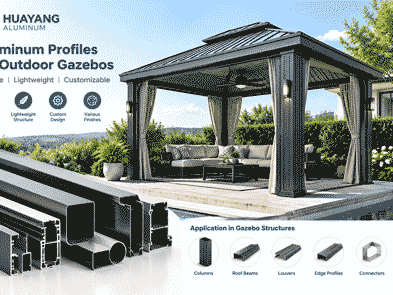
At Henan Huayang Aluminum, we extrude aluminum tubing and profiles strictly to customer drawings — custom cross-sections, cut to length, with drilling, punching and CNC machining in-house, and anodized or powder-coated finishes ready for export.

Send us your drawing or tell us the size and application, and we will recommend the right alloy and wall thickness for your project.






(5).png)