What are the advantages of using aluminum profiles in heat sinks?
2026-02-03
Aluminum profiles offer the following significant advantages in heat sinks:
1. Excellent Thermal Conductivity
High thermal conductivity: Aluminum has a thermal conductivity of approximately 237 W/(m·K), second only to copper (approximately 400 W/(m·K)), but far higher than steel (approximately 50 W/(m·K)).
Rapid heat transfer: It can quickly transfer heat from the heat source (such as CPU, LED chips) to the surface of the heat sink fins, and then dissipate it through air convection.
2. Lightweight Design
Low density: The density of aluminum is approximately 2.7 g/cm³, less than one-third of copper (8.96 g/cm³).
Reduced overall weight: Suitable for weight-sensitive equipment (such as laptops, new energy vehicle battery cooling systems, and aerospace equipment).
3. Processing Flexibility and Cost-Effectiveness
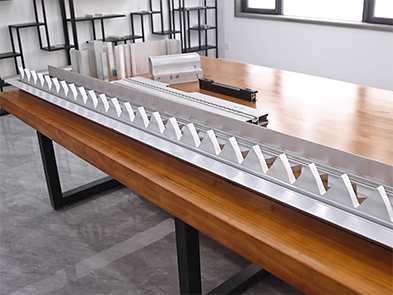
Strong extrusion molding capability: Aluminum profiles can be formed into complex heat sink fins in a single process through extrusion, increasing the heat dissipation area.
Lower cost: The raw material price is lower than copper, and the processing energy consumption is low, making it suitable for large-scale production.
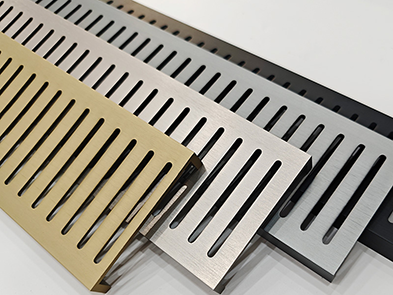
Diverse surface treatments: Can undergo surface treatments such as anodizing and sandblasting to improve corrosion resistance and aesthetics.
4. Good Corrosion Resistance
Natural oxide layer protection: A dense oxide film (Al₂O₃) easily forms on the surface of aluminum, preventing further corrosion.
Enhanced by anodizing: Further improves hardness, wear resistance, and corrosion resistance.
5. Environmental Friendliness and Recyclability
100% recyclable: The energy consumption for aluminum recycling is only 5% of that for primary aluminum production, aligning with green manufacturing trends.
Reduced resource waste: Used heat sinks can be recycled and reused, reducing environmental impact.
With its comprehensive advantages of high thermal conductivity, lightweight design, ease of processing, low cost, and corrosion resistance, aluminum profiles have become the preferred material in the field of heat sinks. Through structural design optimization (such as increasing fin density and combining with heat pipe technology) and surface treatment, its heat dissipation performance and reliability can be further improved.